
Governance
Board packs: where intuition becomes governance
The gap between a board that decides and one that reacts is the quality of the monthly pack.
By Felipe Tocci · Jan 12, 2026 · 5 min read
Boards should not decide based on polished slides, opinions or isolated perceptions. High-performance governance begins when every decision-maker works from the same version of reality.
What a board pack really is
More than a monthly report, the board pack is the primary alignment instrument between executive management and the board. Well structured, it reduces subjectivity, speeds decisions and improves strategy.
Poorly built, it turns meetings into debates about numbers — not about decisions.
The purpose of a board pack is not to show results. It is to enable better decisions.
The most common mistake
Most companies send dozens of pages of charts: a lot of data, little context, little intelligence. Experienced board members do not want more information — they want relevant information that answers whether the company is creating value, executing strategy and sustaining the next move.
The questions a board pack must answer
- Are we creating value?
- Are we executing the strategy?
- Has risk increased?
- Does cash support the next moves?
- Are there deviations that demand immediate action?
Two boards, two decisions
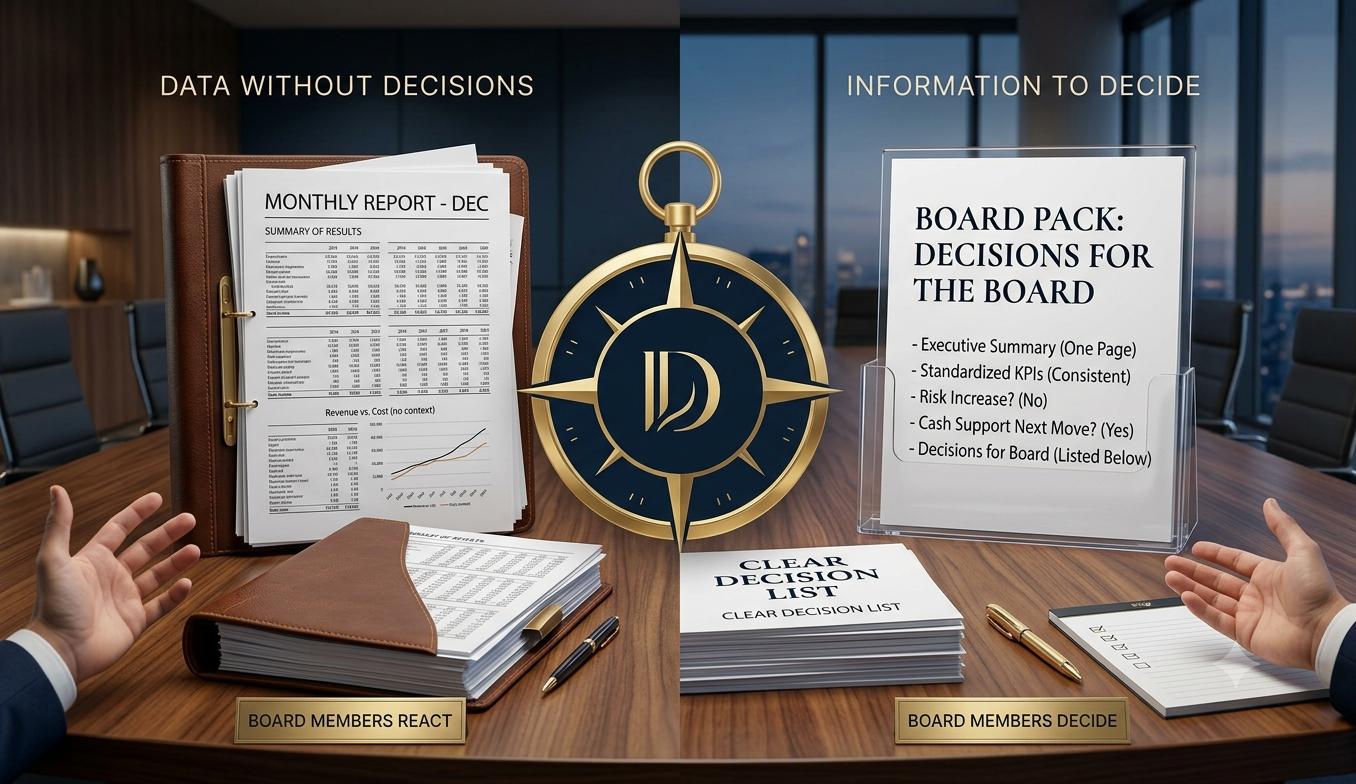
The difference between a board that decides and one that merely reacts is the quality of the information it receives every month.
A board that reacts
Data without decisions
- Dozens of pages of charts
- KPIs that change every deck
- Meetings debating numbers
- Decisions delayed for lack of context
A board that decides
Information to decide
- A one-page executive summary
- Standardized, consistent KPIs
- Meetings focused on decisions
- A clear list of decisions to make
What a high-level board pack contains
Seven blocks that turn data into governance.
1
Executive summary
One page: wins, risks and decisions required.
2
Financial performance
Revenue, margins, EBITDA, cash and working capital versus budget.
3
Commercial performance
Pipeline, conversion, CAC, LTV, recurring revenue and churn.
4
Operations
Productivity, quality, capacity and strategic projects.
5
People
Retention, hiring, engagement and leadership.
6
Risks
Financial, operational, regulatory, technological and market.
7
Decisions for the board
The list of decisions to make. This is where governance happens.
Conclusion
Companies with consistent board packs decide faster, align strategy better and arrive more prepared for fundraising, audits and M&A processes.
A board does not create value only through the people on it. It creates value through the quality of the decisions it can make — and better decisions start with better information.
References
Turn data into board decisions.
At Daravus we structure executive board packs that turn financial and operational data into strategic decisions for boards, investors and CEOs.